Introduction
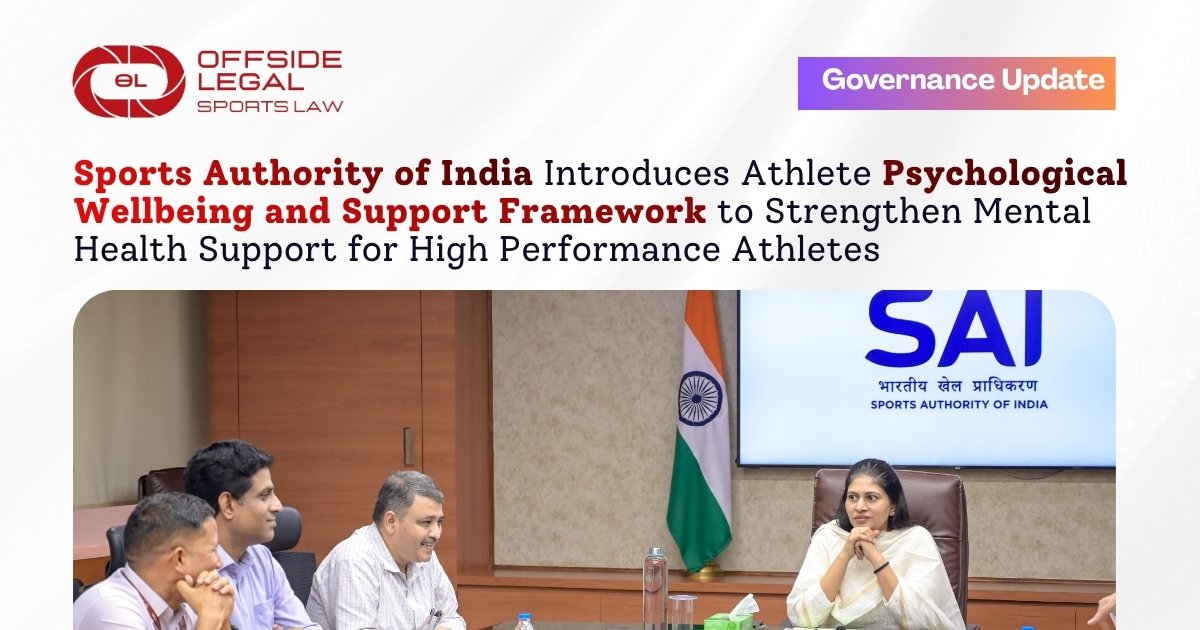
The Sports Authority of India (SAI) has introduced a new Athlete Wellbeing Framework aimed at strengthening structured mental health support for high-performance athletes training at its centres across the country. Unveiled by Union Sports Minister Mansukh Mandaviya, the Athlete Wellbeing Framework marks a shift from a purely talent-management approach to one that is comprehensive and athlete-centric, with mandatory psychological screening now built into an athlete’s training journey from day one.
What the Athlete Wellbeing Framework Covers
The Athlete Wellbeing Framework applies to SAI’s National Centres of Excellence (NCOEs) and Sports Training Centres (STCs), where coaching and administrative staff have been given a clear directive: athletes’ concerns must be met with total safety, and seeking psychological help must be treated as a sign of strength rather than weakness. The Minister explained that young athletes face intense pressures, from selection anxieties and injury fears to homesickness — and that if these pressures are left unaddressed, they can lead to burnout severe enough to force a talented athlete out of the sport altogether. The Athlete Wellbeing Framework is designed to intervene systematically before that point is reached.
Also read: Sports Law Bootcamp 2026: Registrations Open
Mandatory Screening from Day One
A central feature of the Athlete Wellbeing Framework is that wellness tracking no longer waits for a crisis to occur. Mandatory psychological screenings now begin immediately upon an athlete’s induction into an NCOE or STC, and SAI centres will conduct regular, non-invasive wellbeing assessments through the annual training calendar to catch shifting stress levels early. This proactive screening model is intended to replace the earlier, more reactive approach, where support was typically offered only after a problem had already become visible.
A Universal Acceptance Model
The Athlete Wellbeing Framework operates on what the Ministry has described as a Universal Acceptance model. Under this model, every athlete — from the grassroots level to the elite tier — can formally or informally raise concerns about anything affecting their peace of mind. Every regional centre is being equipped with dedicated counsellors to receive and act on these concerns. Where an issue cannot be resolved by a primary counsellor, the Athlete Wellbeing Framework establishes a clear escalation pathway that transfers the matter directly to the Regional Director, ensuring concerns do not stall at the first point of contact.
Also watch: Competition Law in Sports ft. Prof. Lovely Dasgupta
Safeguards for Reporting Concerns
To make athletes feel secure about coming forward, the Athlete Wellbeing Framework builds in independent and anonymous reporting channels, including suggestion boxes, so that athletes can safely raise concerns about peers, management, or coaching staff without fear of retaliation. Counsellors appointed under the framework will also coordinate with sports nutritionists and sports scientists to provide holistic care for any athlete flagged through the screening or assessment process. In addition, the framework mandates frequent, core training on Sexual Harassment and POCSO regulations across all SAI training centres, reinforcing a broader culture of institutional accountability and athlete safety.
Why This Framework Matters for Indian Sport
Mental health has increasingly come into focus in Indian sport in recent years, with travelling psychologists becoming a more common presence at major competitions. Until now, however, there was no systemic, centre-wide framework in place to manage the psychological demands of a modern athlete’s career. The introduction of the Athlete Wellbeing Framework is a step toward closing that gap, embedding structured psychological support directly into SAI’s institutional processes rather than leaving it dependent on ad hoc arrangements or individual initiative.
Also read: Khelo India Scheme Revamped: ₹36,441 Crore Approved for 2026–31
A Complementary CSR Push for Sports
Alongside the Athlete Wellbeing Framework, the Ministry also announced that sports will now join health and education as a priority sector for Corporate Social Responsibility (CSR) funding by Central Public Sector Enterprises (CPSEs). Previously, sports was an eligible CSR activity under Schedule VII of the Companies Act, 2013, but without a coordinated policy push, CSR investment in the sector remained limited and dependent on individual CPSE priorities. Under the new notification, “Development of Sporting Activities” has been designated a Common CSR Theme for 2026-27 and 2027-28, with priority areas including sports infrastructure, sports equipment, access to professional coaching, promotion of sports, and nurturing of sportspersons. Since priority-sector themes receive 60 per cent of CSR funding under existing Department of Public Enterprises rules, this change is expected to meaningfully increase the visibility of sports within CPSE CSR planning and unlock additional investment for athlete support systems, coaching, and grassroots infrastructure.
Governance Implications
For sports administrators, National Sports Federations, and legal practitioners working with athletes, the Athlete Wellbeing Framework signals a broader institutional shift toward formalising duty-of-care obligations within India’s high-performance sporting ecosystem. By mandating screening, embedding escalation pathways, and requiring regular POCSO and sexual harassment training at training centres, SAI is moving athlete welfare from an informal, discretionary practice toward a documented, centre-wide governance requirement, one that is likely to shape how compliance and safeguarding standards are assessed across NCOEs and STCs going forward.
Also watch: National Sports Governance Act, 2025 ft. Mr. Vidushpat Singhania